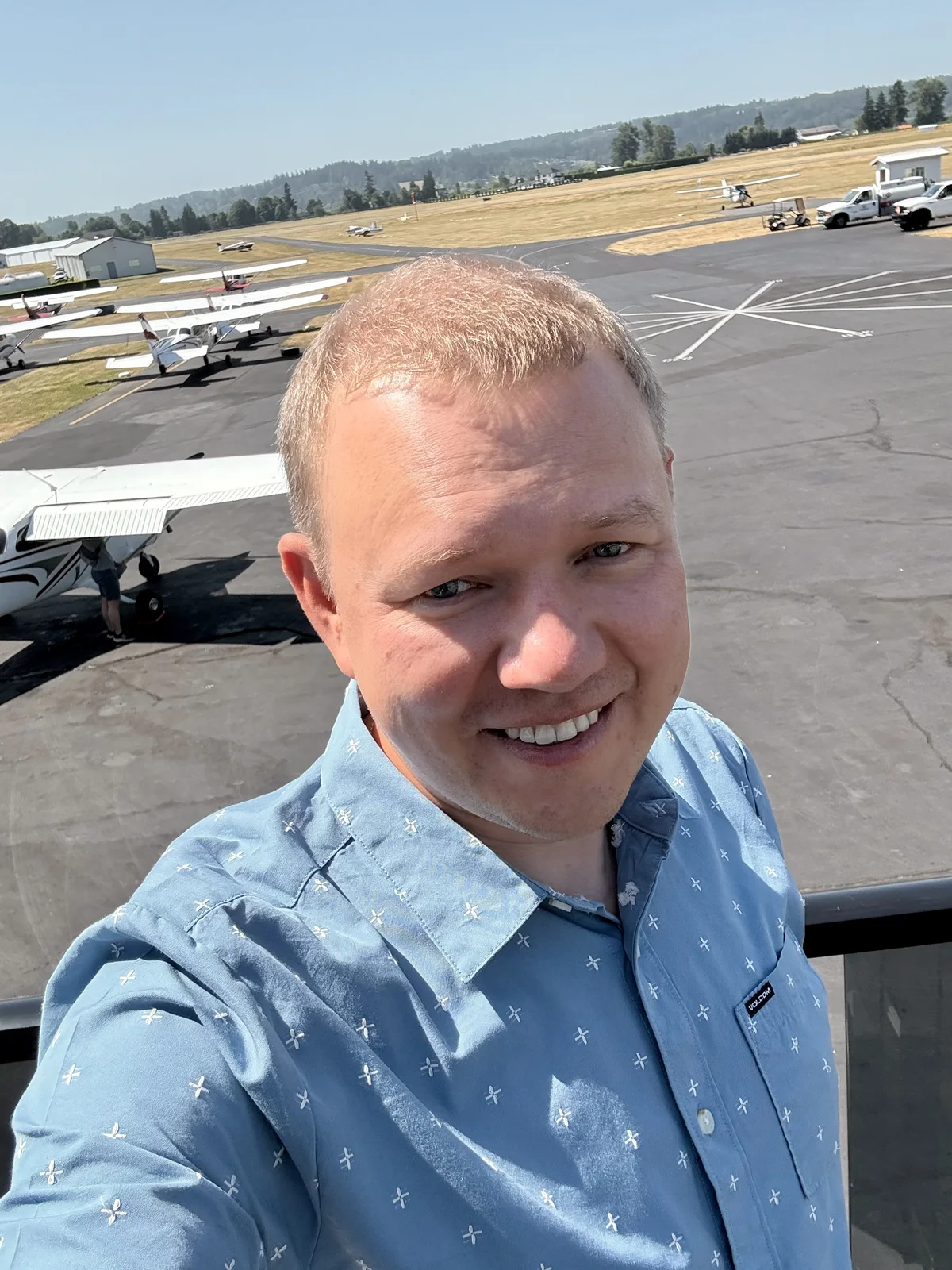
I passed the FAA Part 107 knowledge test today, on the first try. It’s 60 multiple-choice questions, 70% or above to pass. Part 107 is the rule that lets you fly a drone commercially in the United States — anything beyond a hobby flight, from inspections to mapping to public safety work, requires it. The certificate itself is just a number on a PDF. The studying is the part worth talking about.
How I studied
I spent about a week on it, in spare time, using only free resources on the internet. The bulk of it was one YouTube course that I watched through a few times — it covers the whole syllabus end to end. To test myself, I used King Schools’ free FAA practice exam until I was consistently scoring well above the pass line. I also kept the FAA’s official Remote Pilot study guide on hand as a reference. That was it — no paid prep course, and I didn’t feel like I needed one.
What surprised me
I went in expecting certain things, and got more than I bargained for.
I expected airspace classification and reading sectional chart maps — the difference between Class B, C, D, E, and G, and how to find that on a chart. I expected to need some basic knowledge of weather: how to decode a METAR, what kind of conditions ground a flight.
What I didn’t expect was how deep it went. I didn’t expect to learn all the details of airports — the meaning of every ground marking, the lines and signs painted on taxiways and runways, what each one tells a pilot. And I definitely didn’t expect to be reading advanced weather charts that go well beyond “is it going to rain.” A lot of this is knowledge a manned-aircraft pilot needs, and it has only a loose connection to flying a small drone under 400 feet.
But it was fun, and a little exotic. It felt like a glimpse into what studying for a private pilot license (PPL) would be — a window into the broader world of aviation that the drone rule sits inside.
The exam
The exam itself was super smooth. I’m glad I picked Harvey Field in Snohomish to take it. The setup there is really good, and the staff were helpful and friendly the whole way through. If you’re in the area and need a testing center, I’d recommend it without hesitation.
What it opens up
Since I’m building in this space, having the license is more or less a requirement. Commercial drone work — inspections, mapping, photography for hire, public safety — all sits behind Part 107, so I needed it either way.
But I also wanted a glimpse into how the regulatory side actually operates: how the airspace is structured, what the FAA expects you to know, where the rules draw their lines. Getting the certificate was the practical reason. Understanding the system around it was the part I was actually curious about.